
You've read the airport bookshop version of this list before. Ice cubes, driving on the left, "chips" vs "crisps." All true, all fairly harmless, and none of it is really what trips people up.
I've lived in London for over twenty years. Before that, I spent years working in some of the city's grandest hotels, welcoming Americans and Canadians the moment they walked through the door, jet lagged and slightly unsure of the rules. I've worked within the royal household too, which teaches you more about British formality than almost anything else could. So I'm not just guessing at what confuses visitors from North America. I've watched it happen, in person, hundreds of times.
This guide skips the trivia and gets into what actually changes your trip: how paying for things works, how service culture differs, how directness reads differently here, and how a genuinely well meaning American habit can land badly in London. Nothing here is designed to embarrass you. It's designed so nothing does.
The Short Version
If you only have two minutes, here's the table. Everything below expands on why each of these matters more than it looks.
| Topic | United States | United Kingdom |
|---|---|---|
| Tipping | 15 to 20 percent expected everywhere | Service charge often already included and extra tipping is a bonus, not an obligation |
| Small talk | Common with strangers and staff | Polite but brief. A long chat with a stranger can read as unusual |
| Queuing | Loose, first come first served | A near sacred social rule. Jumping a queue is one of the few things that will genuinely annoy a Londoner |
| Volume | Fine to be heard across a restaurant | Quieter is the default, especially on public transport |
| Directness | Say what you mean plainly | Often softened, understated, or wrapped in irony. "Not bad" can mean "excellent" |
| Floors | Ground floor is the 1st floor | Ground floor is 0. The 1st floor is one flight up |
| Dates | Month/Day/Year | Day/Month/Year |
| Currency | US Dollar | Pound Sterling. Contactless is the norm, cash is rarely needed |
If nothing else sticks, remember this one: the biggest differences between the UK and US aren't the words for things. They're the unwritten social rules underneath them, and those are the ones that actually shape how your trip feels.
Money, Tipping and Paying for Things
This is the one I watched cause the most quiet anxiety at the hotels I worked at, so let's deal with it properly. In the US, tipping isn't really optional, it's built into how hospitality staff are paid. In the UK, it genuinely isn't. Restaurants commonly add a service charge of 10-12.5% to the bill already, and once that's on there, you don't need to add more. If it isn't included, rounding up or leaving 10% for good service is generous and appreciated, but never expected.
Don't over tip out of nervousness. I've seen well meaning American guests tip 20% on top of an already included service charge, and staff will rarely correct you, because it feels rude to. You're not being cheap by tipping less here. You're following the actual local convention.
Bars and pubs are even simpler. You order and pay at the bar, there's no table service to tip and nobody will bring you a bill with a tip line built in. Taxis round up to the nearest pound or two. Hotel porters and housekeeping are the one place a small cash tip is genuinely welcome, since it doesn't run through a card machine.
For the full breakdown by situation, from restaurants to hotels to hairdressers, I've written a dedicated guide to tipping in London that goes further than this section does.
On currency itself: the pound is not the dollar, obviously, but the more useful fact is that London barely uses cash any more. Contactless card and phone payments are standard everywhere, including on buses and the Underground, where you can tap in and out with a contactless card or phone directly, no ticket required.
A fee free travel card that holds pounds is worth setting up before you fly. It saves the poor exchange rate most US and Canadian banks quietly apply, and it means you're never caught out needing cash. If you want the full picture on what a trip actually costs day to day, my currency and money guide for US and Canadian visitors covers exchange rates, ATMs and what's genuinely worth paying for in cash.
Food, Drink and Dining Out
American dining culture is built for speed and volume: free refills, fast service, big portions, ice in everything. London runs at a different pace, and it isn't a lesser one, just a different assumption about what a meal is for.
- Restaurants won't rush you. You'll often need to actively flag someone down for the bill. Nobody's trying to turn the table over.
- Soft drinks come one at a time, no free refills, and iced tea isn't really a thing here.
- Tap water is free if you ask for it by name. Ask for "water" without specifying and you may be brought and charged for bottled water.
- Ice is minimal by American standards. Ask for extra if you want it, nobody will think it's a strange request.
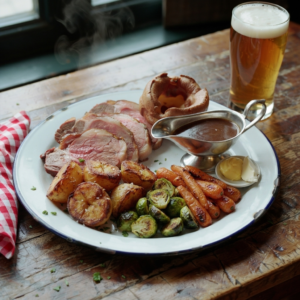
- Book ahead for anywhere popular, especially on a Friday or Saturday night, and for a proper Sunday roast, which genuinely does sell out.
- Kitchens close earlier than you'd expect from a major city. Don't assume you can turn up for dinner at 10pm the way you might in New York.
The stereotype about British food being bland is about twenty years out of date. London's restaurant scene is genuinely excellent and covers everything from Michelin starred dining to some of the best South Asian, East African and Middle Eastern food in Europe. What's true is that a proper Sunday roast, a good curry, and a decent pub Scotch egg are all worth actively seeking out rather than assuming any old pub will do them well.
Getting Around: Quieter, More Rule Bound, Very Walkable
Two things surprise North American visitors most on the Tube: how quiet it is, and how seriously people take standing on the right of the escalator. Conversation on the Underground is genuinely rare outside of the late evening weekend crowd, and it isn't unfriendliness, it's just the local norm. Match it rather than fight it and you'll feel far less like you're doing something wrong.
- Stand on the right on escalators, walk on the left. This one genuinely matters. Blocking it will get you tutted at.
- Driving is on the left, and as a pedestrian, look right first, then left, then right again before crossing. Many crossings have "LOOK RIGHT" painted on the road for exactly this reason.
- Black cabs are metered, licensed, and can be hailed on the street. They're excellent but pricier than an app based car for longer journeys.
- The Underground and buses use contactless tap in/tap out, no ticket-buying required, and fares are automatically capped for the day.
- Not every station has a lift. If mobility is a factor for anyone in your group, check accessibility before you build your route.
My honest opinion, from twenty years of getting around this city: London rewards walking far more than most American visitors expect. Distances that look intimidating on a map are often a genuinely pleasant twenty minute walk, and you'll see far more of the city that way than by ducking underground for two stops.
Language: Same Words, Different Meanings
The vocabulary differences get all the attention because they're the easiest to turn into a listicle, but only a handful actually matter in practice.
| American English | British English |
|---|---|
| French fries | Chips |
| Potato chips | Crisps |
| Cookie | Biscuit |
| Elevator | Lift |
| Ground floor | Ground floor (the floor above is the "first floor") |
| Restroom / bathroom | Toilet, or "the loo" |
| Pants | Trousers (in the UK, "pants" means underwear) |
| Umbrella | Brolly (informal) |
The one worth actually remembering: don't call a bum bag a "fanny pack." In British English, "fanny" is a crude word for female anatomy, and it's one of the few phrases that will get a genuinely surprised reaction rather than a polite laugh.
Two format differences catch out more people than any vocabulary word: dates are written day/month/year here, so 4/7 means the 4th of July, not April 7th, and the 24-hour clock appears on transport timetables constantly. 19:00 is 7pm. It looks intimidating for about a day and then becomes completely natural.
Manners and the Unwritten Rules
This is the section my hospitality background actually earns its keep on, because manners in London aren't really about politeness in the American sense. They're about not drawing attention to yourself.
After two decades of welcoming American guests into London hotels, the single most common note I'd give is: you're not doing anything wrong, you're just being noticed for being louder and friendlier than the room. Neither is a flaw. It's just a different room.
- Queuing is close to sacred. Whether it's a bus stop, a coffee shop, or a museum entrance, the order people arrived in is respected without anyone needing to enforce it. Jump it and you'll feel the disapproval even if nobody says a word.
- Small talk with strangers, especially service staff, is lighter than in the US. Friendly and polite, but not usually an invitation to a longer conversation.
- Self deprecation is a genuine social currency here. Confident boasting, even when true, tends to land less well than downplaying your own achievement.
- Understatement is normal. "Not bad" often means genuinely good. "Quite good" can mean only fairly good. Tone and context do a lot of the work.
- Personal space on public transport is real. Eye contact and conversation with strangers on the Tube is the exception, not the rule.
None of this means Londoners are cold. It means warmth here tends to show up in reliability and dry humour rather than in immediate open friendliness, and once you clock that, London stops feeling standoffish and starts feeling, frankly, quite funny. For a fuller rundown of the specific social rules visitors trip over, my London etiquette guide goes deeper than I can here.
Practical Things That Genuinely Catch People Out
These are the small, unglamorous logistics that don't come up on a highlight reel but do come up in real trips.
- Plugs and voltage. The UK uses a three-pin plug (Type G) and 230V, different from the US. You'll need an adapter, and unless a device specifically says it's dual voltage, a straight adapter alone won't be enough for something like a hair dryer.
- No sockets in bathrooms. This is a genuine safety regulation, not an oversight. Dry your hair or shave in the bedroom.
- Air conditioning is inconsistent. Many hotels, homes and even Tube lines don't have it, simply because London's climate has historically not needed it. Pack accordingly for a summer visit.
- Bedding is different. Expect a duvet rather than a top sheet and blanket. If you specifically prefer a top sheet, it's genuinely worth packing a light one.
- You bag your own groceries. Supermarkets don't pack for you, and reusable bags aren't automatic. You can bring one or buy one at the till.
- Shops close earlier than in the US, particularly on Sundays, when reduced trading hours are still standard for larger stores.
A decent universal adapter with USB ports earns its space in your bag more than almost anything else you'll pack. It's a five minute purchase before you fly and it solves a problem you'd otherwise discover the hard way, at 11pm, with a dead phone.
What Americans Get Wrong About the British
Since I'm being honest in this guide rather than just polite, a few myths are worth retiring properly.
- "The food is bad." It genuinely isn't, and hasn't been for a long time. London's food scene rivals any major world city.
- "Everyone sounds posh." London's accents span an enormous range, and the plummy, clipped accent from period dramas represents a small slice of how the city actually sounds.
- "Brits are cold and unfriendly." Reserved with strangers at first, yes. Cold, no. The warmth shows up differently and often takes a beat longer to appear.
- "Tipping is basically the same as the US, just smaller." It isn't smaller scale American tipping, it's a genuinely different system built around included service charges.
- "You'll need cash a lot." The opposite is true. Contactless is so dominant that carrying much cash is rarely necessary.
Frequently Asked Questions
Do I need to tip in London?
Not in the way you do in the US. Many restaurants already include a 10-12.5% service charge, and where they don't, rounding up or leaving 10% for good service is generous, not obligatory.
Is it rude to make small talk with strangers in London?
No, but it's less common and usually briefer than in much of the US. A friendly comment is fine, but expecting a longer chat with a shop assistant or fellow passenger is where it tends to feel out of place.
Why is the ground floor different in the UK?
In the UK, the ground floor is level 0. What Americans call the "second floor" is the UK's "first floor," one level up from ground. It affects hotel room numbers and lift buttons, so it's worth knowing before you arrive.
Will my phone charger work in London?
Only with a plug adapter for the UK's three pin socket. Most modern phone chargers handle the voltage difference automatically, but always check the label, and pack an adapter with USB ports to save carrying multiple items.
Is London expensive compared to major US cities?
It's broadly comparable to New York or San Francisco once you account for the exchange rate, though transport and museum entry often work out cheaper than US equivalents. My honest cost breakdown of London covers real numbers if you're budgeting a trip.
Bringing It All Together
None of this is designed to make London feel like a minefield. It genuinely isn't one. Almost every difference on this page is small, and Londoners are far more forgiving of an honest visitor mistake than any of this list might suggest. What actually matters is the handful of things that shape how comfortable your whole trip feels: understanding tipping so you're not overpaying out of anxiety, reading the queue culture correctly, and knowing that reserved doesn't mean unwelcoming.
This is exactly the kind of thing that's easy to get right once someone who actually lives here has walked you through it, and much harder to get right from a generic checklist. If you'd rather have a real Londoner build your entire trip around this kind of local knowledge, from where you stay to how you spend each day, that's exactly what my bespoke London itinerary service is for.
And if this is your very first trip here, start with my guide for first-time visitors to London, which picks up where this page leaves off.